
Tableau to Power BI Migration is the most trending topic in 2026, and it's not just another passing buzzword. It's a signal. A shift in how organizations are rethinking their entire data strategy.
What started as quiet comparisons between tools has now turned into a full-scale movement, driven by cost pressure, ecosystem alignment, and the demand for faster, smarter insights.
The shift from Tableau to Power BI is not purely a licensing decision, though cost is a significant driver. The deeper reasons are architectural and are listed below
- AI and Copilot capabilities
- Native Microsoft ecosystem integration
- Microsoft Fabric convergence
- Performance scalability
- Licensing cost and bundling
- An expanded range of visualization options
Power BI's Copilot integration allows analysts to generate reports, create measures, and summarize visuals using natural language.
These capabilities are natively embedded and continuously updated - not available in Tableau Desktop or Tableau Cloud.
Power BI connects directly with Azure Synapse Analytics, Azure Data Lake, Dataverse, SharePoint, and Microsoft Fabric.
For organizations whose data infrastructure is already Azure-native, Tableau sits outside the stack. Power BI sits inside it.
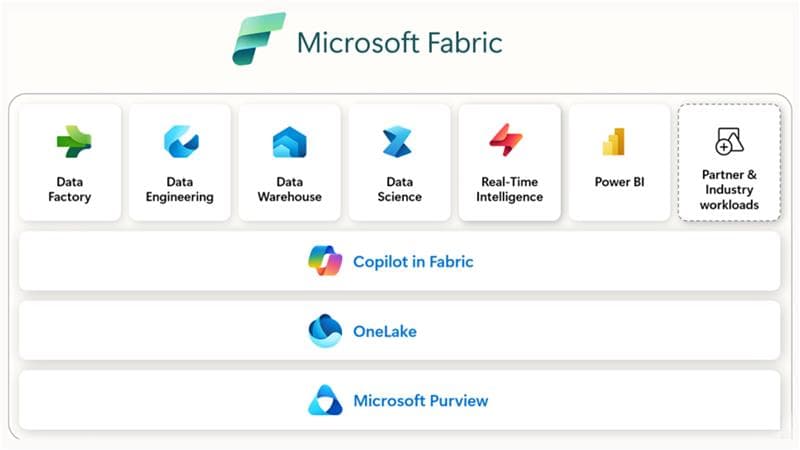
With the rollout of Microsoft Fabric, Power BI has become the reporting layer of a unified data platform - sharing compute, storage, and governance with Fabric's lakehouse, data warehouse, and real-time intelligence components.
Tableau has no equivalent integration path into the Fabric environment.
Power BI's VertiPaq columnar compression engine, combined with import mode and incremental refresh, delivers strong performance for large enterprise datasets.
DirectQuery mode with aggregation tables provides a path for near-real-time reporting that Tableau's live connection approach handles differently.
Tableau's per-user licensing model often runs at $70–$150 per user per month for full Creator access.
Power BI Pro, by contrast, costs $10 per user per month, and is often included in Microsoft 365 E3/E5 licenses that organizations already pay for.
For a 500-user organization, that translates to potential annual savings of $350,000–$840,000.
Power BI provides a more versatile toolkit for modern data storytelling. While Tableau is often praised for its artistic flexibility, Power BI's native visual library is massively extended by the Microsoft AppSource marketplace.
This ecosystem offers hundreds of community-developed and certified custom visuals - ranging from specialized financial gauges to advanced Sankey diagrams - that can be integrated with a single click.
| Factor | Tableau | Power BI |
|---|---|---|
| Pro User Cost/month | $70–$150 | $10 (often free with M365) |
| AI / Copilot | Limited | Built-in (Copilot for Power BI) |
| Microsoft 365 Integration | Third-party connector | Native |
| Cloud Data Platform | Standalone | Microsoft Fabric |
| Mobile App | Yes | Yes |
| Natural Language Query | Ask Data (limited) | Q&A + Copilot |
| Governance & Security | Tableau Server/Cloud | Power BI + Purview |
In conclusion, migrating from Tableau to Power BI in 2026 is a strategic evolution rather than a simple tool replacement.
While Tableau remains a powerful data exploration engine, Power BI's aggressive cost structure, deep integration with the Microsoft Fabric ecosystem, and advanced AI capabilities through Copilot make it the more scalable and future-proof choice for modern enterprises.
Organizations that make this transition can expect not only significant licensing savings but also a more unified, intelligent, and collaborative data culture that leverages the full power of their existing Microsoft investments.