products
services
resources
Contact us
Return to Blogs
Why Organizations Are Migrating from QlikView to Power BI in 2026
Posted On:
May 2026
By:
Mohana Sai
Your organization adapted QlikView when it launched, making you the pioneers of the modern BI landscape in the 1990s. For a generation of data teams, it defined what modern BI looked like.
But 2026 is a different world. The platform that once defined the cutting edge is now in maintenance mode, its latest release carrying an
end-of-support date of September 30, 2027,
requiring organizations to upgrade to the newer version and receiving minimal feature updates.
Meanwhile, the organizations that pioneered BI with QlikView are now facing a familiar choice: lead the next wave of analytics, or manage the legacy of the last one?
Over 112,000 organizations have already answered that question by moving to Power BI. The reasons go well beyond deadlines - they span:
Licensing economics
Power BI's market dominance
Microsoft Fabric integration
Copilot and AI capabilities
Microsoft ecosystem advantage
Self-service analytics and democratization of data
Superior governance, compliance and security at scale
This article breaks down exactly why organizations are making the switch in 2026 - not in theory, but in practice.
1. QlikView's Maintenance Mode
QlikView is Qlik's legacy product from the 1990s. Qlik's development focus has shifted entirely to Qlik Cloud Analytics (formerly Qlik Sense). While QlikView is still supported (the latest version, 12.100, has an end-of-support date of September 30, 2027), organizations running QlikView are managing a platform that needs upgrade to new version and receives minimal new feature investment Migration is becoming a matter of
when
, not
if
.
The implication for planning:
With a 2027 end-of-support deadline, organizations that start their migration in mid-2026 have roughly 12–15 months to plan, execute, and validate - a tight but achievable window for most mid-sized environments, and a challenging one for enterprise-scale deployments with hundreds of QlikView applications.
2. The Licensing Math Has Shifted Dramatically
QlikView's licensing model has long been a point of friction. Power BI Pro is priced at $14 per user per month, while QlikView's pricing runs considerably higher - often $30+ per user per month before enterprise agreements.
For organizations already inside the Microsoft 365 ecosystem, Power BI Pro licenses may already be included, making the cost savings immediate and significant.
For a 500-user analytics deployment, the difference can represent hundreds of thousands of dollars annually. That saving alone funds a migration project and often leaves budget for the training and change management that makes migrations succeed.
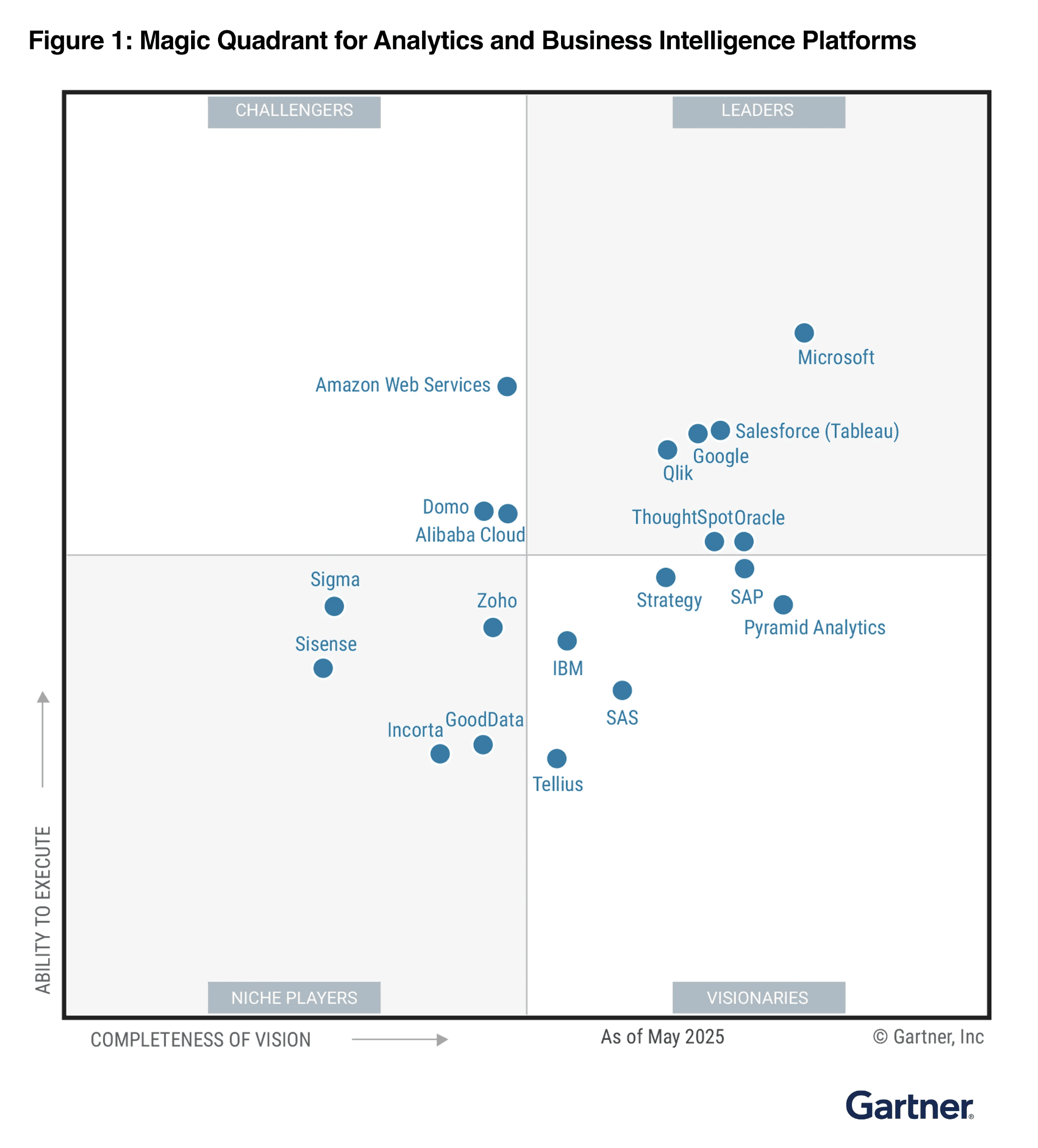
3. Power BI Is Now a Gartner Magic Quadrant Leader — for 18 Consecutive Years
Power BI now commands over 30% of the global analytics and BI platform market and is consistently recognized as a Leader in Gartner's Magic Quadrant for Analytics and Business Intelligence Platforms. With over 30 million monthly active users and deep native integration with Microsoft 365, Azure, and Microsoft Fabric, Power BI is the de facto enterprise standard for organizations already invested in the Microsoft ecosystem.
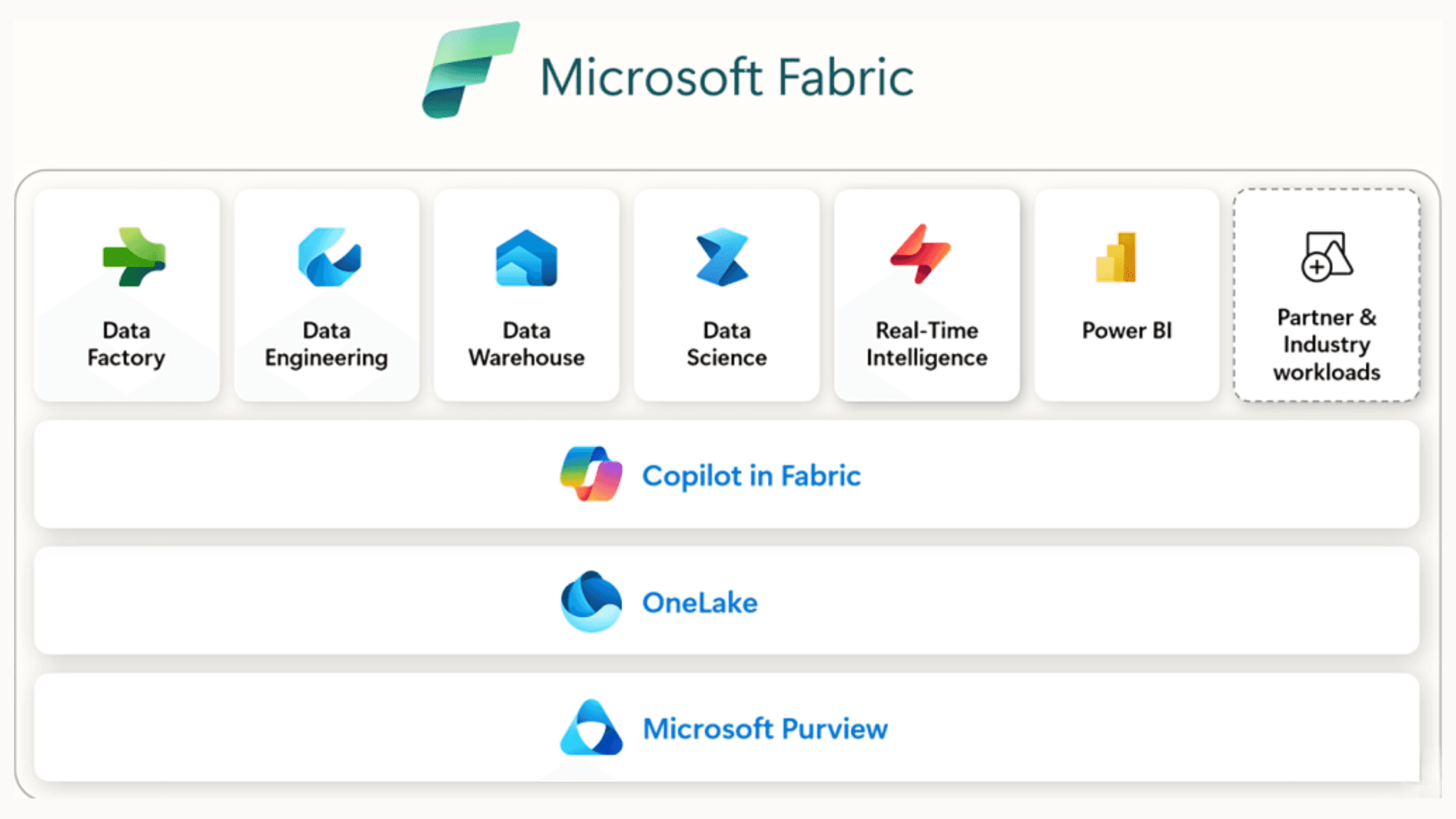
4. Microsoft Fabric Changes the Value Equation Entirely
In 2026, Power BI is no longer a standalone product - it is the visualization and reporting layer of Microsoft Fabric, Microsoft's unified data platform. This means Power BI users now have a direct path to data engineering, warehousing, and data science workloads all within one governed environment.
QlikView has no equivalent. It is a standalone BI server - a point solution in an era when the market is moving toward integrated platforms. Organizations that migrate to Power BI aren't just changing their reporting tool; they're gaining access to an enterprise data platform they can grow into for years.
5. Copilot and AI: Power BI's Widening Lead
Copilot in Power BI
Microsoft's generative AI layer built on Azure OpenAI is now woven throughout the platform. As of 2026, Copilot in Power BI enables Automatic report generation, Natural language Q&A, AI generated measure descriptions, Standalone copilot experience, and copilot for mobile.
QlikView has no generative AI capabilities. None. Qlik's AI investment is concentrated in Qlik Cloud Analytics - a different product. For organizations whose boards and leadership teams are asking “how is our BI platform using AI?”, the answer on QlikView in 2026 is an uncomfortable one.
6. The Microsoft Ecosystem Integration Advantage
For organizations already using Microsoft 365, Azure, Teams, SharePoint, and SQL Server, Power BI is the natural analytics layer. Reports can be embedded in Teams channels, dashboards shared via SharePoint, and data refreshed directly from Azure SQL or Fabric. This level of native integration removes the friction that custom QlikView connectors often create.
7. Self-Service Analytics and the Democratization of Data
Power BI Desktop
is free to download and designed with self-service in mind. Its drag-and-drop interface, Copilot-assisted report creation, and tight integration with Excel make it accessible to analysts who would never have touched a QlikView development environment.
QlikView
was built for developers. The QVW development model, load script authoring, and Section Access configuration all require technical proficiency that typical business users don't have. Self-service in QlikView is limited to what BI teams pre-build and publish.
This is particularly significant given a Harvard Business Review finding that
70% of BI projects fail due to user adoption issues
— not technology. A platform that business users can actually use independently dramatically reduces that risk.
8. Superior Governance, Security, and Compliance at Scale
Power BI's row-level security (RLS), sensitivity labels, and integration with Microsoft Entra ID (formerly Azure AD) offer enterprise-grade governance that is easier to configure than QlikView's section access model. As compliance requirements grow, this becomes a critical differentiator.
The Bottom Line: Why 2026 Is the Right Year to Move
The case for migrating from QlikView to Power BI in 2026 is stronger than it has been at any prior point - for several converging reasons:
The deadline is clear.
QlikView 12.100 reaches end-of-support on September 30, 2027. Organizations that start planning now have the time to do it right. Those that wait risk a rushed migration under pressure.
The platform gap has widened.
Power BI's monthly release cadence, Copilot AI capabilities, and Microsoft Fabric integration represent a level of platform investment that QlikView — in maintenance mode — will never match.
The economics favor it.
Licensing savings, reduced infrastructure costs (moving from on-premises QlikView servers to cloud-based Power BI Service), and access to a larger talent pool all point in the same direction.
The risk of staying is growing.
Security vulnerabilities after end-of-support, increasing difficulty finding QlikView talent, and the governance gaps that auditors and compliance teams are increasingly identifying - the cost of inaction is no longer zero.
For organizations that have been deliberating, 2026 is the year to stop deliberating and start planning. The migration itself is achievable - the preparation just needs to start now.
Tags:
QlikView to Power BI Migration 2026, Why Migrate QlikView Power BI, QlikView End of Support 2027, Power BI Copilot 2026, Microsoft Fabric BI Migration, QlikView vs Power BI, Power BI Gartner Magic Quadrant, QlikView end of life
Submit
Connect with us
For any queries on business, media, partnerships, recruitment, reach out to us
Analytics Aura is on a mission to unlock the full potential of automation to modernize analytics.
Contact us
letsconnect@analyticsaura.com
Location
26/2, 2nd Floor, LDC Road,
Chinna Chokikulam, Madurai, Tamil Nadu.
Cell B & C, ACIC-Mepco Innovative Foundation,
Sivakasi, Tamil Nadu.
2026 Analytics Aura. All rights reserved.
Privacy Policy
Support
Terms of Use
Cookie Settings